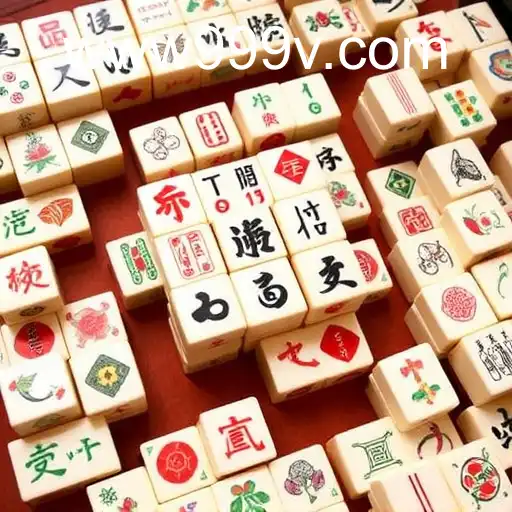
Delving into the Rich World of Mahjong
The intricate world of Mahjong offers an exciting blend of strategy, skill, and a dash of luck. Originating in China, Mahjong has evolved, transcending borders and becoming a beloved pastime around the globe. This ancient game, often characterized by its beautifully adorned tiles, is more than just a game; it is a social experience that connects players and spans generations.
Origins and Evolution of Mahjong
Mahjong's roots are deeply embedded in Chinese culture, with its origins dating back to the Qing Dynasty. While various myths surround its inception, one popular narrative claims that Confucius, known for his love of birds, inspired the game's design. The connection between Mahjong and birds is evident in the names and designs of several tiles.
The game originally was an exclusive leisure activity for the wealthy and elite. Over time, it evolved, and its popularity soared, leading to widespread participation across different social classes. By the early 20th century, Mahjong started to attract attention beyond China, making its way to the United States and eventually gaining a global following. With this expansion, several regional variations emerged, each bringing its unique twists to the classic game.
The Structure of Mahjong
A standard Mahjong set contains 144 tiles, although variations might alter this number slightly. These tiles are divided into categories, including suit tiles, honor tiles, and bonus tiles. Suit tiles are further classified into Bamboo, Characters, and Circles, each ranging from numbers one to nine.
Honor tiles feature Winds and Dragons, which hold special significance. The Winds are further broken down into East, South, West, and North, while the Dragons are color-coded as Red, Green, and White. Bonus tiles consist of Flowers and Seasons, which offer additional points and strategic advantages.
Basic Rules and Gameplay
Mahjong can be played with a group of four players, with each participant aiming to complete a winning hand by forming melds and a pair, often compared to the card game Rummy. A typical game includes several rounds, and the objective is to be the first to achieve 'Mahjong' - a complete hand.
Each player begins with 13 tiles and, during their turn, picks up one tile and discards another, striving to craft a winning combination. Melds can be formed through a Chow (a sequence of numbers within the same suit), a Pung (three identical tiles), or a Kong (four identical tiles). The player who first completes a legally recognizable hand declares Mahjong and wins that round.
The Impact of Mahjong in Contemporary Culture
Today, Mahjong is more than merely a game; it represents a social activity that brings families and communities together. Its influence extends into various aspects of culture, with references appearing in films, literature, and art. Mahjong tournaments have become popular events, further cementing its place in modern-day entertainment.
Technological advancements have also played a significant role in Mahjong's contemporary relevance. Online platforms and mobile applications like 999V.VIP offer enthusiasts a virtual space to engage in Mahjong, overcoming geographical barriers and allowing for a broader player base. These modern adaptations have introduced younger generations to Mahjong, ensuring its continued propagation.
Mahjong as a Tool for Cognitive Development
Apart from its entertainment value, Mahjong is also heralded for its cognitive benefits. The game demands strategic planning, memory retention, and quick decision-making — skills that stimulate mental agility. Studies suggest that regular engagement with Mahjong may contribute to mental sharpness, especially among the elderly, possibly delaying cognitive decline.
Playing Mahjong requires players to recognize patterns, manage probabilities, and react swiftly to changing scenarios. These mental exercises enhance concentration and improve logical thinking and cognitive flexibility, making Mahjong more than just a leisurely activity but a tool for mental fortification.
Conclusion: The Unyielding Allure of Mahjong
While technological advancements continue to transform traditional games, the essence of Mahjong remains untouched. Its enduring appeal lies not just in the intricate rules or the beautiful tiles, but in its ability to bridge cultural and generational gaps. Whether played in a traditional setting or on a modern digital platform like 999V.VIP, Mahjong's charm persists.
For many, Mahjong is a nostalgic journey, a connection to cultural roots and cherished memories. For others, it is a challenging intellectual pursuit. Regardless of its role, Mahjong's legacy is undeniable, cementing its position as one of the world's most cherished games.